hot line: 86-510-80628100hot line: 86-510-80628100
for high-pressure hydraulic cylinders with working pressures higher than 30 mpa, the internal quality of cast steel parts is difficult to meet the pressure requirements of the design. after analysis, non-metallic inclusions are inevitable in the casting process of cast steel cylinder bodies, which can reduce the mechanical properties of steel, especially the weakening effect on toughness. moreover, there are inevitable small casting defects such as pores, sand holes, and shrinkage holes inside the cast steel parts. during use, due to factors such as vibration induced stress, material fatigue limit, and stress release inside the cylinder body, the internal defects of the cylinder body will gradually spread to the surface, resulting in cracks.
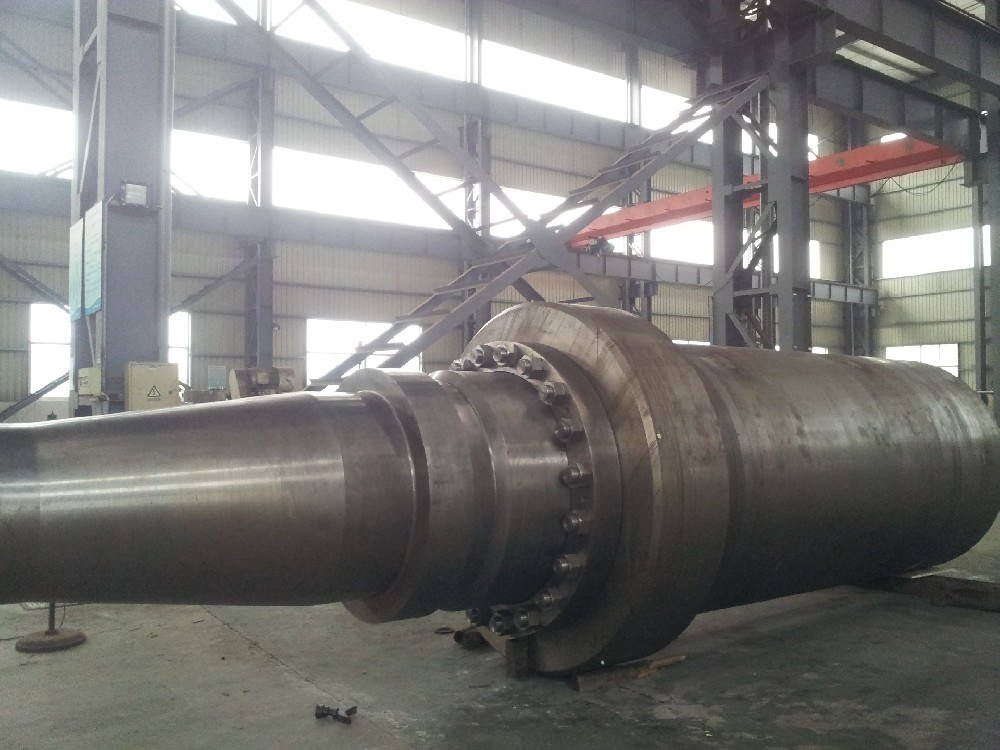
to reduce such internal defects, forging the cylinder body is an ideal choice. the advantage of forging is that the microstructure inside the forging is relatively uniform, and its performance is higher than that of cast steel and welded parts. compared with cast steel parts, forged steel parts have better continuity, density, mechanical properties, and service life in terms of metal fiber structure. however, the disadvantage is that forged steel parts cannot completely forge the shape of the cylinder body cavity. for large cylinder bodies, the weight of the forging blank is about 3-4 times the net weight of the workpiece, so the manufacturing cost is very high. the combination of forging and welding can not only give the cylinder body the structure of forged steel parts, but also reduce the gross weight of forged steel parts, which is an optimized structural method.
forging welding bonding technology is a manufacturing method for workpieces made by welding forged cylinder sections together. the forging and welding combination technology of the cylinder body is to divide the cylinder body into two parts: the cylinder tube and the cylinder bottom, which are made of forged steel parts. after rough machining, they are welded together for precision machining. the final cylinder body has a good organizational structure and mechanical properties, and can reduce manufacturing costs.
the manufacturing difficulty of this technology mainly focuses on the quality of groove welds. for thick walled forging welding, the groove design is a narrow gap small angle groove welding form, which requires the use of specialized narrow gap welding equipment to complete, and requires root cleaning treatment in the reverse direction of the groove to remove defects at the welding root. by adopting a groove welding form with a concave cushion plate that does not require root cleaning, combined with automatic submerged arc welding, the welding angle position is adjusted to complete narrow gap groove welding. the preheating temperature before welding, interlayer temperature during welding, and post welding layered annealing slow cooling are strictly controlled. then, the welding bottom is processed to remove areas prone to defects such as porosity, slag inclusion, and cracks. the surface of the inner and outer weld areas of the cylinder body is subjected to magnetic particle inspection, and there are no crack defects, ensuring the manufacturing quality of the forged welded structure cylinder body.
the pressure test results show that when the pressure is 42 mpa and the holding time is 30 minutes, there is no leakage in the cylinder body, proving that it meets the design requirements.
the cylinder structure and manufacturing method can be widely applied in the welding of large thick walled alloy steel forgings, replacing specialized equipment for narrow gap welding. adopting automatic submerged arc welding can ensure welding quality.